
Old habits
December 2025
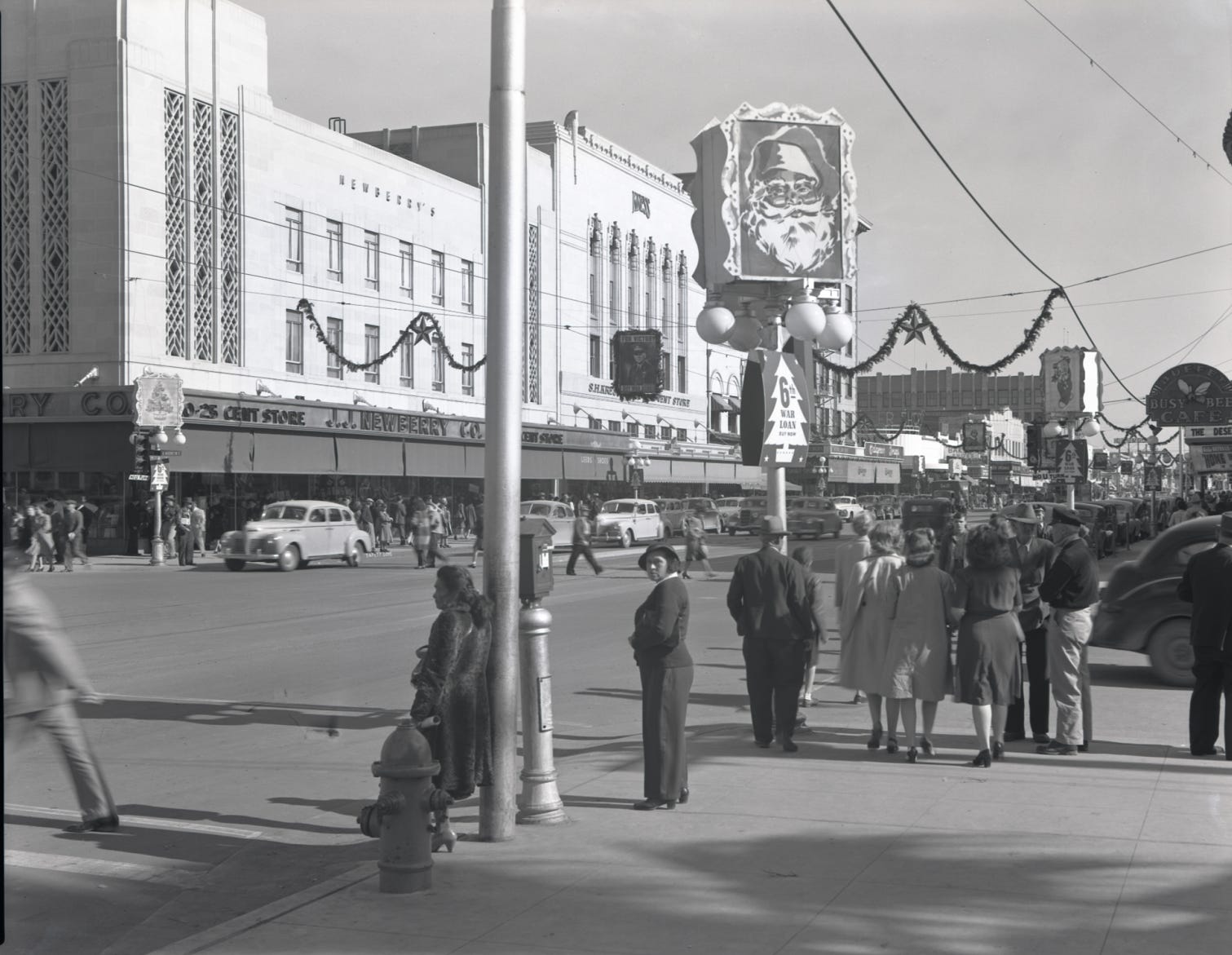
One of the fun parts about teaching American history in Phoenix is that, by the time you get to December, students start to notice how many of our downtown streets are named after U.S. presidents.
The first ones are obvious: Washington, Adams, and Jefferson. But then you get to Madison, Monroe, Jackson, Van Buren, and Polk. By the end of the first semester, Lincoln and Grant.
The last president who earned a downtown street name was Teddy Roosevelt, our 26th president.
(Apologies to Taft, our 27th president, who signed the bill that made Arizona a state in 1912. Taft got no love in early Arizona history due his stubbornness in trying to dictate the terms of our state constitution.)
The north-south streets in downtown Phoenix are numbered. 1st Avenue, 2nd Avenue, etc.
Originally, those streets were named mostly after Native American tribes:
Starting from 7th Avenue and going east to 7th Street, the names were: Yavapai, Hualpai, Cocopa, Yuma, Papago, Mohave, Cortes, Montezuma, Maricopa, Pima, Pinal, Aribiapa, Tonto and Apache.
The names were changed to numbers in the 1890s. Historian Philip Vandermeer explained the reason for the change:
The proponents said that this was modern and it would make delivery of mail easier. Putting numbers seemed, in a simple stroke, to be creating a more modern image for the city.
The names were changed but not forgotten. The majority of Arizona’s counties are named after Native American tribes, including seven from the list above.
Historical drama
We are approaching the 250th year since the Declaration of Independence. Although victory in the Revolutionary War was far from assured in 1776, this year has become the birthday of the United States.
I’ve been watching the PBS documentary “The American Revolution” by Ken Burns. The documentary is a six-episode, 12-hour long film that was released in late November. I’m on the last episode, and I concur with this assessment from conservative columnist George Will:
Consider this documentary the unofficial beginning of our 250th birthday party. Given today’s pandemic of crankiness, the party might trundle downhill from here. But for six nights, the view from the hilltop is riveting.
The crankiness began immediately upon release of the film.
National Review, a conservative publication, published not one but two columns bashing Ken Burns for promoting progressive propaganda. Florida governor Ron DeSantis amplified the crankiness, writing on Twitter that it’s a “shame” to see the occasion of our 250th birthday “used to further a political agenda by misrepresenting the historical record.”
The specific issue that prompted these attacks?
The way Ken Burns presented the Iroquois Confederacy in the opening minute of the documentary.
After a couple of quotations, the narrator begins the documentary by saying,
Long before thirteen British colonies made themselves into the United States, the Six Nations of the Iroquois Confederacy—Seneca, Cayuga, Onondaga, Tuscarora, Oneida, and Mohawk—had created a union of their own that they called the Haudenosaunee—a democracy that had flourished for centuries.
In the next beat, the narrator says,
In the spring of 1754, the celebrated scientist and writer Benjamin Franklin proposed that the British colonies form a similar union. He printed a cartoon of a snake cut into pieces above the dire warning “Join, or Die.”
A few weeks later, at Albany, New York, Franklin and other delegates from seven colonies agreed to his Plan of Union and then went home to try and sell it. But when the plan was presented at the colonial capitals, each of the individual legislatures rejected it, because they did not want to give up their autonomy. The plan died, but the idea would survive.
Twenty years later, “Join, or Die” would be a rallying cry in the most consequential revolution in history.
I understand why this opening segment caused a knee-jerk reaction among some conservatives to recoil into defensive culture-war posturing. When you open a film on the American Revolution, you are expecting something different.
To the ear of a culture warrior, the opening segment might sound like a land acknowledgement statement — a quasi-religious ritual imposed by leftists in recent years where the facilitator of a meeting (on any topic) should first say a few words about indigenous lands before continuing with the business of the meeting.
But I also understand why Ken Burns made the editorial decision to open his documentary on the continent of North America, which is the place setting for this epic drama.
I’m not going to wade into specifics about the Iroquois Confederacy or the Albany Plan of Union. If you are interested in a detailed and fair analysis of this historical controversy, I recommend this post by historian William Hogeland.
What I want to do here is make a broad defense of the Ken Burns film. And to point out that we don’t have to keep fighting the same cultural war battles we were fighting in the early 2020s.
If you watch the American Revolution documentary at any length, you will see that it tells an inspirational and patriotic story about the origins of the United States of America. This should be happy news to conservatives who are paranoid about anti-American propaganda.
The film does not shortchange the classical themes of liberty, sacrifice, and heroism. Remember, this is a 12-hour long film. It goes into detail about how the people of the American colonies rallied together under the banner of liberty to fight the British. The film celebrates the unique contributions of the Founding Fathers. Additionally, the film covers the military history of the war, from strategies and supply lines down to the fighting on the ground.
The “progressive propaganda” argument regarding the Iroquois Confederacy rests on a conclusion that simply doesn’t exist if you watch past the first minute of the film. Here’s what Dan McLaughlin argued in his National Review piece about the film’s introduction:
The message that this scene-setting is plainly designed to send is that the founding of the United States was in some sense derivative of Iroquois ideas, prompted by Iroquois recommendations, and/or modeled on Iroquois institutions. None of this is true.
But that’s not how the film depicts the founding of the United States.
In the second episode, The Declaration of Independence is presented as a creative and unique political document whose main influences were Aristotle, Cicero, John Locke, and the Virginia Declaration of Rights. The narrator says,
Thomas Jefferson was proposing something altogether new and radical in the world. It was the American people’s right, he argued – it was their duty – to throw off tyranny and learn to govern themselves.
What the film does is tell the story of the American Revolution from a variety of different lenses. In addition to telling the classical story about the heroism of the Founding Fathers and the sacrifices for liberty, it also tells stories we might not have heard before.
In the fourth episode of the Ken Burns film, we learn that the Revolutionary War also became a civil war within the Iroquois Confederacy, as some members supported the American Patriots and others sided with the British.
The film talks about women and how they contributed to the cause of the war. It talks about the various religious cultures in the colonies. It talks about France and Spain, and the sprawling global ramifications of the Revolution.
And the documentary tells the story of slavery. Less than a hundred years after the Declaration of Independence, the United States would fight a Civil War over slavery, a war that nearly destroyed the country. It makes sense for a lengthy documentary about the American Revolution to tell this story, even though it’s probably going to offend the right-wing nationalists.
Obviously, it’s fair to argue about historical interpretations of our history. This is the natural effect of publishing a work of history. People will argue about it.
But the cranky accusations of anti-American propaganda are the result of people being stuck in the mentality of the early 2020s, when the radical left was (both figuratively and literally) trying to tear down statues of George Washington.
That’s not what this film is doing.
Ken Burns is out there promoting the idea of George Washington as the indispensable man of the American Revolution. Burns is going on libertarian podcasts making the provocative claim that the American Revolution was the most important event in world history since the life of Jesus Christ.
So why the vitriol?
Part of the problem is our fractured and atomized media landscape. It’s easy to take clips out of this 12-hour film in order to bait people’s attention and provoke anger online. Before the National Review columns were published, an obnoxious tweet attacking the intro segment went viral and thus entered the discourse.
The film’s strength is also its weakness. Ken Burns is trying to tell a bunch of stories at once. I think he does a good job of it, but it’s not possible to tell a complete story about the American Revolution that will please both progressives and traditionalists.
Historian Adam Rowe wrote an excellent review of the film. Here is how he frames the problem:
The years 2015-2025 have been energizing and inspiring for culture warriors and historical polemicists. But Burns is neither. His craft consists in conveying, intelligently, artfully and respectfully, the mainstream historical consensus. And that consensus has become so politicized it no longer meaningfully exists. Burns’s earnest effort to reconjure it merely results in incoherence.
This country was born out of conflict. Our system is designed to be oppositional and competitive. The First Amendment promises that our arguments will continue indefinitely.
My hope is not that a Ken Burn film escapes criticism, but that we turn the page on the years 2015-2025 and start to rebuild.
Our country was born out of conflict, but it was also born out of unity. There must be something we hold in common.
May we find it in 2026.
ICYMI
In the early days of the Cholla Express newsletter, I wrote several sketches of Arizona history. Here is a selection of those posts.
Camelback Mountain: Paying homage.
Creating Arizona: How the state’s borders took shape.
Eusebio Kino was an Arizona cartographer: A glimpse at a Jesuit missionary and desert pioneer who is being considered for sainthood by the Catholic Church.
The Phoenix: The bird, the myth, the legend.
The Coliseum: The construction of a cultural treasure.
Excellent piece, Billy! Not that you ever write anything less than that. :)
Never dawned on me the National Review and other right wing publications would pick the Native American opening to be annoyed with. Didn’t know that wha where Franklin got the idea and found it very interesting, as ideas start somewhere. I really thought slavery would cause a stir. In reality the first civil war was also the Revolutionary War. If only we’d settled the issue of “free men” then. (and women for that matter). Also NPR. I was excited for the series and recommended it to a friend far more conservative. The reaction was well if it’s on NPR it’s got to be political. After discussing Ken Burns accomplishments she back peddled, which was great and is watching. Can’t we get our heads out of our asses and stop pigeon holing every little thing? Thanks for the terrific article. Well done.